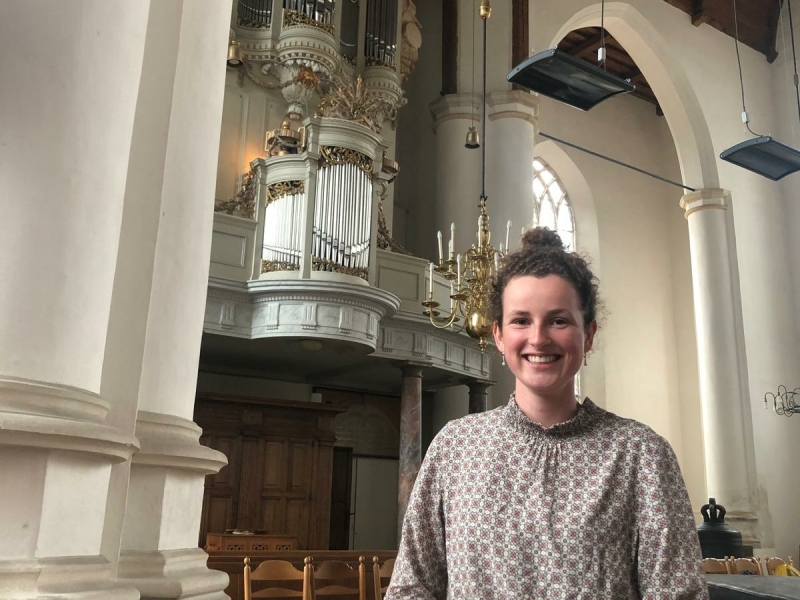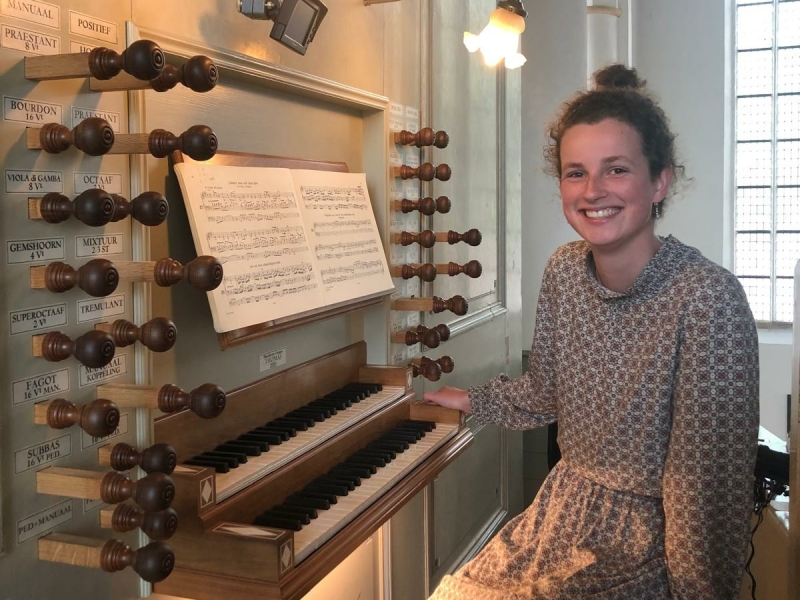
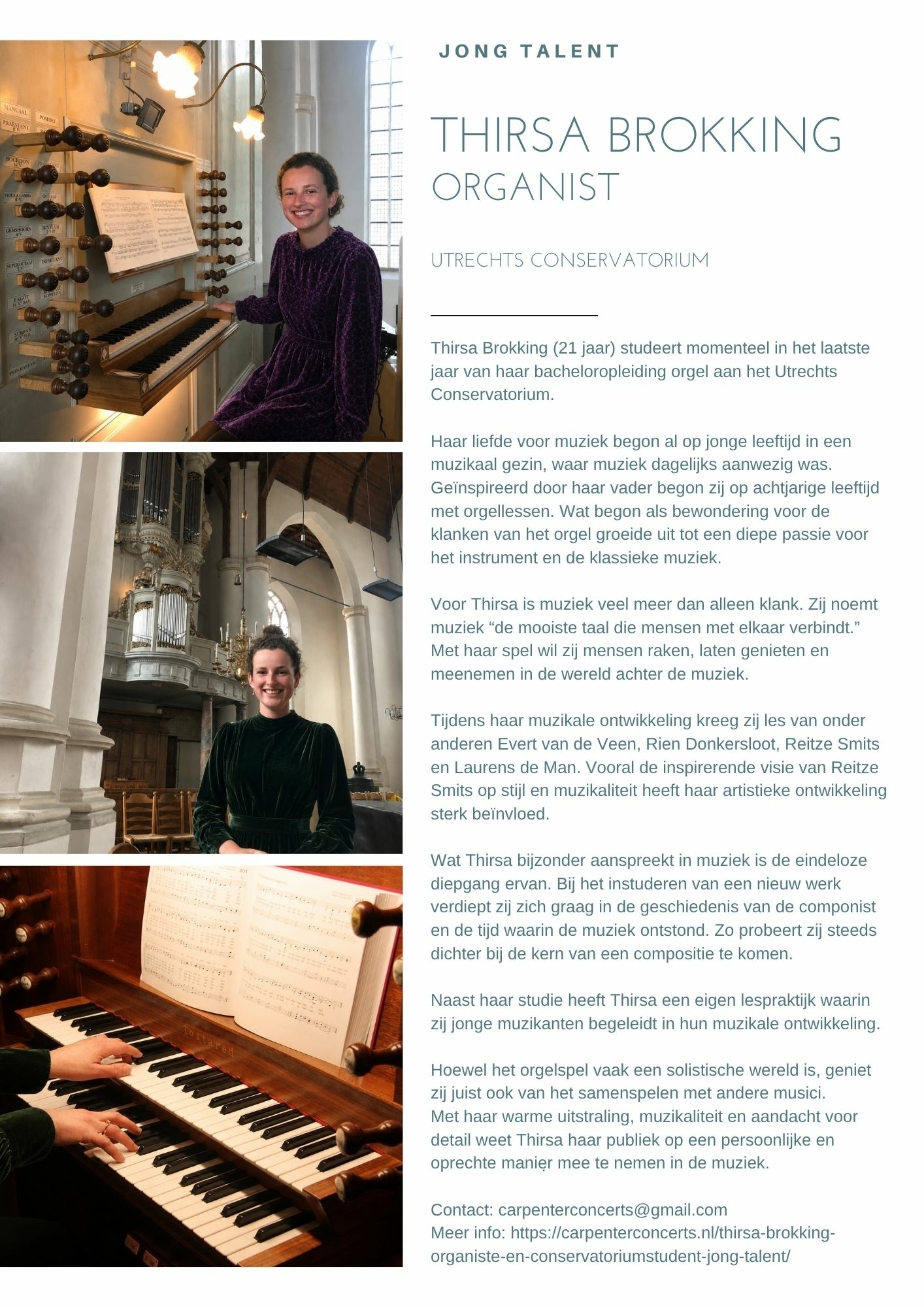
Thirsa is a young Dutch organist currently completing the final year of her studies at the Utrecht Conservatory. Music has played a natural and meaningful role in her life from an early age. Growing up, music was part of daily life in her family home, and shortly before turning eight she began taking organ lessons. Her father taught her the first foundations of organ playing. The way he was able to bring music to life through the organ made a deep impression on her. “What he could create from the organ was so beautiful, I wanted to be able to do that too,” she recalls.
After her first lessons, Thirsa continued her musical development with Evert van de Veen and later with Rien Donkersloot, who prepared her for conservatory studies. During her time at the conservatory she studied with Reitze Smits, a musician who greatly influenced her, not only technically but also musically. His enthusiasm, his vision of musical style, and his approach to performance have had a lasting impact on her own understanding of music. After his retirement, she continued her studies with Laurens de Man.
For Thirsa, music is far more than simply a profession or a field of study. She describes music as “the most beautiful language that connects people.” What especially moves her is music’s ability to touch people deeply from within. “You can touch people’s hearts with it, and bring joy both to others and to yourself.” At the same time, she experiences music as something endless: a world in which new beauty, stories, and insights can always be discovered. That continuous search and lifelong learning are what make music so special to her.
When preparing a new piece, Thirsa enjoys immersing herself in the period in which the music was written. She studies the life of the composer and the historical context surrounding the work in order to come closer to the heart of the music itself. She also finds inspiration in listening to performances and recordings by other musicians.
Alongside her studies, Thirsa is currently preparing for her bachelor final recital while completing the final assignments of her degree. She also runs her own teaching practice, where she guides young musicians in their musical development. Although organ playing is often a solitary discipline, she greatly enjoys making music together with others, including family members, fellow students, and colleagues.
One particularly personal moment in her musical life took place during a concert in Woerden, where she met her current fiancé, who had attended the concert as a listener. The two hope to marry next year.
Before every performance, Thirsa consciously takes time to become familiar with the instrument she is about to play. Shortly before a concert, she often practices “silently,” without sound, to reconnect with the feel of the organ. Because every instrument differs, from the keyboards to the pedalboard, this ritual helps her become fully at one with the instrument before the music begins.
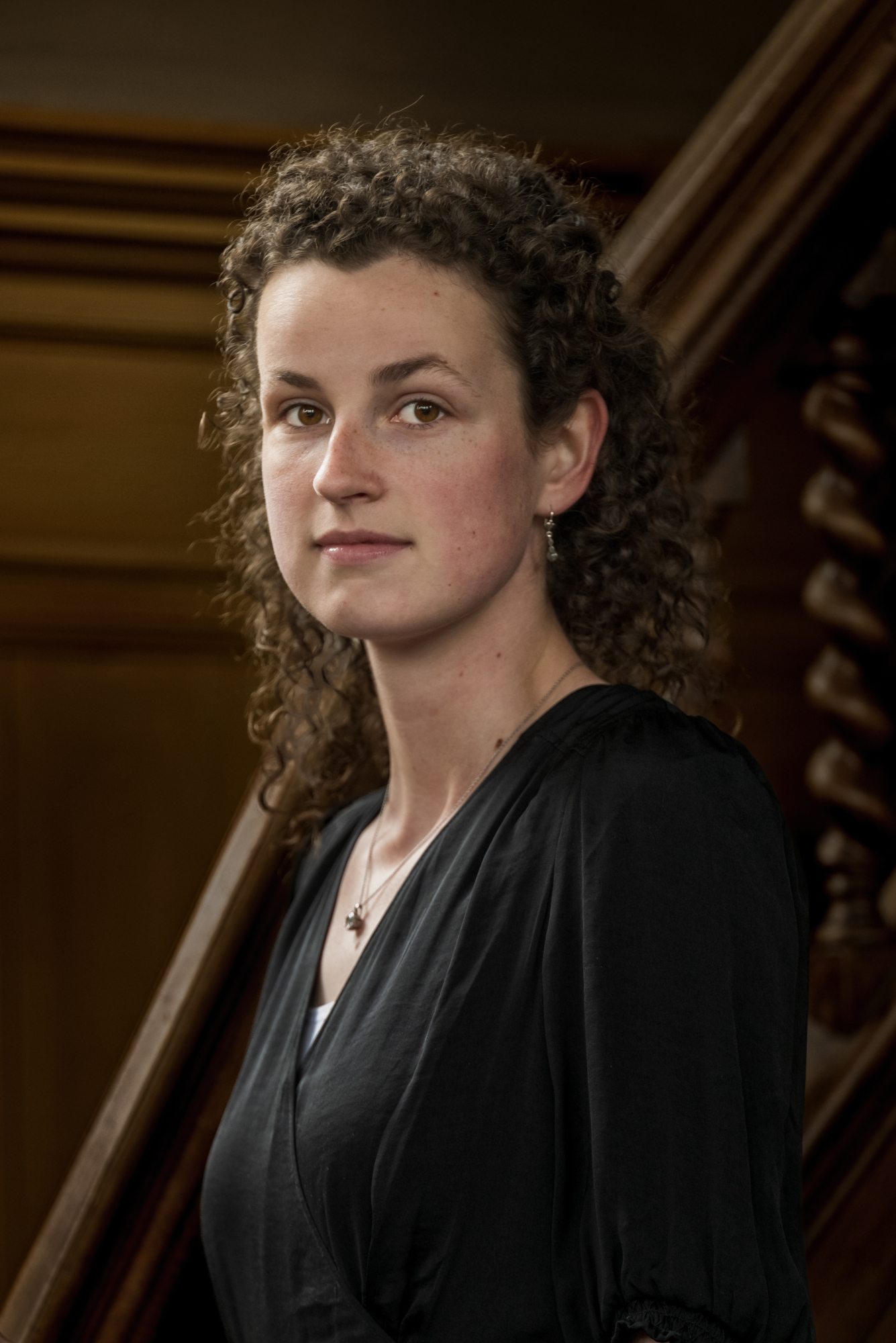
Thirsa playsLouis Vierne
In Conversation with Thirsa
About Music, Inspiration and the Organ
Eerdere concerten:

Stevenskerk Nijmegen
St Janskathedraal Den Bosch
Bonaventurakerk Woerden